
Moon Township City Directory Collections
There is no verified Moon-specific directory run published on the Moon Township Public Library website. That is an important research limit, not a reason to substitute a Pittsburgh title for a Moon record. The useful starting shelf includes a local reference desk, regional digital volumes, Pittsburgh microfilm, and a local repository that can add place context. Each source serves a different part of the search. Record the exact title, edition, page, and stated coverage before placing a household in Moon Township.
| Collection | Years | Where Held | Access |
|---|---|---|---|
| Moon Township Public Library genealogy resources | No Moon directory run published | Moon Township Public Library | In-library Ancestry Library Edition, reference contacts, and regional referrals. |
| Historic Pittsburgh directories | 1815-1945 collection; 1837-1930 with gaps in collection notes | Historic Pittsburgh, University of Pittsburgh | Digital collection. Verify the geography for the individual volume. |
| Pittsburgh City Directory microfilm | 1813, 1815, 1819, 1826, 1837, 1839, 1841, 1844, 1847, 1850, 1856-1874, 1876-1932, 1934-1962, 1964-1965, 1967-1975 | Carnegie Library of Pittsburgh Pennsylvania Department | Microfilm shelf lead. The listed run is Pittsburgh material, not confirmed Moon coverage. |
| Jockers Historical Research Repository | Local-history holdings; no directory year run stated | Township Municipal Building | Contact the repository about local artifacts, memories, photographs, and place history. |
Gaps should remain visible in a research log. Historic Pittsburgh describes its collection as mostly Pittsburgh and Allegheny City, with some Homestead and nearby-borough material. Carnegie's holdings are a strong regional shelf lead, but the research does not verify that every listed edition includes Moon Township. A title can be close by and still leave the address outside its coverage.
Moon Library Research Leads
Moon Township Public Library is the right local contact before a searcher spends time on a regional volume. Its adult-services page identifies Roxanne Cain for genealogy, research, and reference, and Heather Panella for adult and reference questions. The library also provides Ancestry Library Edition within the building and links researchers to Historic Pittsburgh, the Moon Township Historical Society, and regional genealogy organizations. Ask about cataloged telephone books, suburban or Allegheny directories, yearbooks, newspapers, and database availability, then preserve the answer as a source note rather than assuming a run exists.
Moon Township's official staff directory identifies the municipal contact path that supports a focused historical inquiry.
The municipal building can route a records question, while the library and historical repository are better equipped to help locate regional collections. Keeping those roles separate prevents a search from drifting into the wrong office.
Historic Pittsburgh City Directories Online
Historic Pittsburgh offers the most convenient digitized city-directory collection for the greater Pittsburgh area. Its collection statement names J. F. Diffenbacher and R. L. Polk & Company among the publishers represented from 1815 through 1945. The collection notes describe an online run of city directories published from 1837 through 1930, with gaps. Individual records demonstrate titles such as G. H. Thurston's Directory of Pittsburgh and Allegheny cities, Diffenbacher editions, and Polk's Pittsburgh city directory. These details make the collection valuable for identifying a specific edition, publisher, and series.
Historic Pittsburgh's digitized directory collection displays collection records and individual volume entries.
Use the catalog record to note the title, date, publisher, contributor, geographic subjects, identifier, and rights information. Those fields document the volume being consulted. They do not demonstrate that a particular Moon household appears in it.
Confirm Moon City Directory Coverage
Do not treat the word “Pittsburgh” as a shortcut for Moon Township. Historic Pittsburgh cautions that most of its volumes concern Pittsburgh and Allegheny City, while Carnegie's list identifies a Pittsburgh City Directory microfilm run. Before searching a surname, inspect the title page, publisher statement, geographic subjects, and front matter. If the edition does not claim Moon, Coraopolis, a relevant borough, or a broader Allegheny scope, keep it as regional background rather than address evidence.
Postal and municipal labels complicate this check. Historic Moon Township was much larger than present Moon and later produced 55 municipalities. An older family reference may therefore use a predecessor locality or a Coraopolis or Pittsburgh postal label. That is a reason to test the legal description, map, and stated volume geography, not a reason to silently relabel a record as Moon.
Reading a Moon City Directory
No page-image entry for a verified Moon Township household was located in the researched collection. The inventory below is therefore a directory-reading checklist, not a transcription or a promise that every edition prints every field. Read the title's front matter and abbreviation key first. Then transcribe only what the page actually shows, including spelling, initials, punctuation, and any mark whose meaning the volume itself defines.
| Name | Copy the surname, given name, and initials exactly as printed, including a variant spelling. |
|---|---|
| Family notation | Note a spouse or widow notation only if the edition prints it and its key supports the reading. |
| Occupation | Record an occupation or employer only when it appears in the entry. |
| Address | Preserve the street, house or room number, and any separate business address. |
| Marks and abbreviations | Copy ownership, residence, boarding, or other marks only with the edition's printed key. |
- Criss-cross directory
- A reverse arrangement that may organize entries by street or address instead of by surname. It is useful only when the verified edition covers the place.
- Householder index
- An index organized around the named household contact. Its presence and scope vary by publisher and edition.
- Abbreviation key
- The front-matter legend that explains shortened words and marks. Photograph or transcribe it with the entry before drawing conclusions.
Jockers Repository and Moon Families
The Dr. Robert A. Jockers Historical Research Repository gives Moon a local route that a regional directory cannot replace. The Historical Society describes it as a place for memories, memorabilia, and stories from past and present residents. Township history information places the historical room in the Municipal Building and lists public hours Tuesday from 1:00 to 4:00 p.m. and Wednesday from 6:00 to 9:00 p.m. Contact the repository before a visit with an address, surname variants, years, and any deed or plan reference already found.
The Moon Township Historical Society provides the repository and its local-history context.
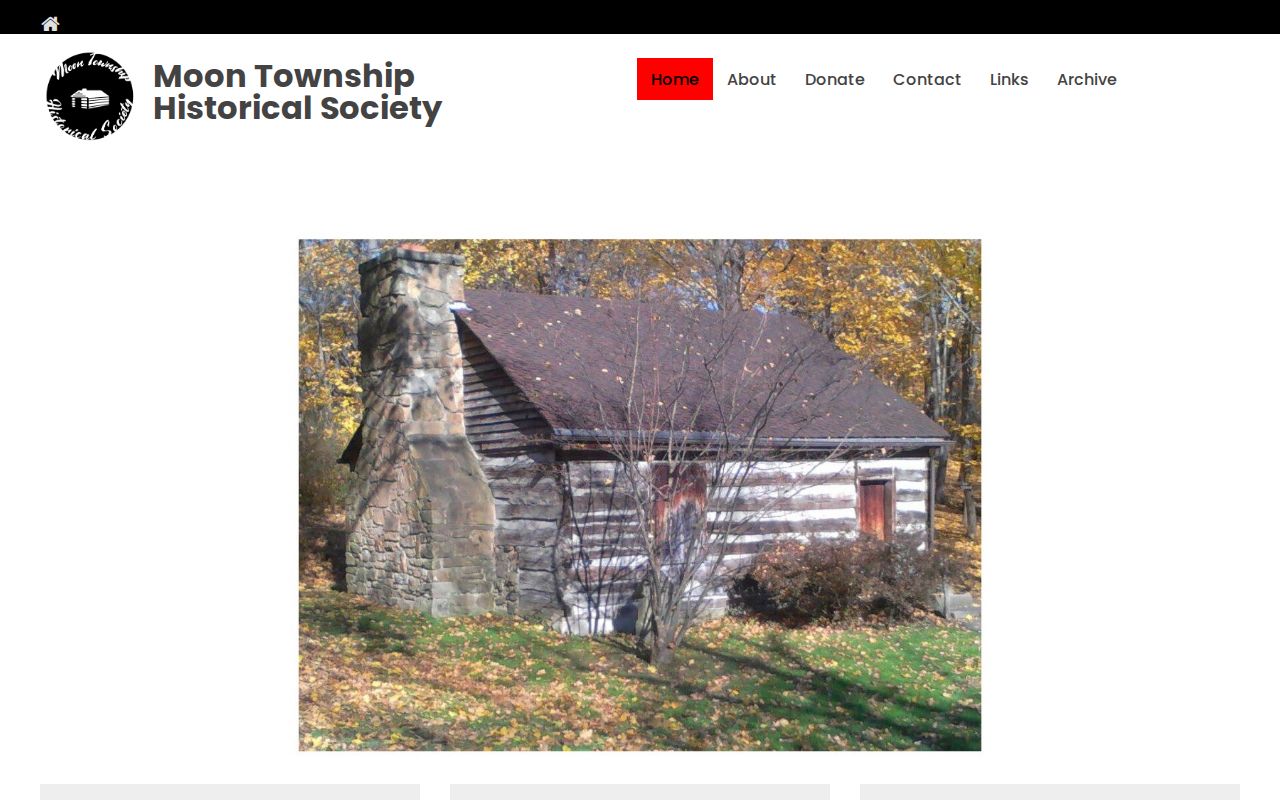
The Coventry Log Cabin shows the value of provenance in a local collection. Built in 1825, it was later disassembled with its logs tagged, moved to Robin Hill Park, and dedicated after restoration in 1983. A house or family file can similarly be useful when its source, date, and original location are recorded.
Map Context for Moon Directories
Maps help test whether a directory address fits the place named by the volume. Historic Pittsburgh's G. M. Hopkins map collection covers the greater Pittsburgh area from 1872 through 1940. The Library of Congress Sanborn catalog is another route for building and street context, but no Moon Township-specific Sanborn edition years were verified in the research. Search Moon, Coraopolis, historic local names, and adjacent borough names in the catalog before attaching a sheet to an address.
A map provides location context, not proof that a person lived at a parcel. Pair a confirmed sheet with a deed plan, map-block-lot, or the actual directory listing. The County's recorded land materials are the stronger bridge when an old street label needs to be reconciled with a present parcel.
Trace Moon City Directory Households
A household trace works best as a dated sequence. Federal census schedules become public on a 72-year cycle, and the latest public decennial schedule is 1950. Carnegie's Pennsylvania Room has 1790-1920 census microfilm according to the County genealogy material. A directory listing can fill a year between census dates only after its geographic coverage is confirmed. Deeds, marriage records, probate, and local history can test a move or name change without turning a single listing into a conclusion.
- Choose a confirmed name or address and a directory edition whose stated geography includes the relevant locality.
- Transcribe the edition title, year, page, spelling, address, and abbreviation-key meaning.
- Check the nearest available census for the household at its enumeration date, preserving the difference between the dates.
- Move one verified directory edition at a time in either direction, noting only printed changes.
- Test a disappearance or address change against deeds, estate material, marriage records, or a local repository inquiry.
A missing entry can reflect a move, a changed spelling, a different publication scope, or an omission. It does not prove a death or family relationship. When a historical name needs a present official check, use the separate Moon Township resident lookup process rather than extending an old listing beyond its date.
Moon Directory Labels Through Time
Moon's history explains why a directory title alone may not settle jurisdiction. Allegheny County formed in 1788 and recorded deeds are available from 1789. Moon Township also began in 1788, originally covering 143 square miles before later producing 55 smaller municipalities. Keep the original locality and date in every note. A later municipal boundary should not be read backward into an older address.
| Date or era | Moon context | Research effect |
|---|---|---|
| 1788 | Allegheny County and Moon Township began. | Historic jurisdiction names can differ from present municipal labels. |
| 1789 onward | County deeds are available from the County formation era. | Recorded land may provide a longer trail than an available directory. |
| 1943 | Mooncrest was designed and built as a war-production residential development. | Its development era can guide a property-history question. |
| 2005 | Mooncrest became a local historic district. | Historic-district review records can add alteration context. |
Coverage check. A nearby regional directory is not automatically a Moon source. Geographic confirmation, a dated entry, and an independent record are stronger than a familiar title on a shelf.